Starting a microbrewery is a major business project that combines brewing technology, equipment engineering, construction, licensing, finance, marketing, and daily operations.
If you are searching for how to start a microbrewery, the first thing to understand is that opening a brewery is not simply a matter of buying a brewhouse and making beer.
A successful microbrewery needs the right business model, production capacity, location, brewery equipment, utilities, licenses, packaging strategy, sales channels, and working capital.
The most effective approach is to work backward from your business goals:
Business Model → Market → Budget → Location → Licensing → Production Capacity → Brewery Layout → Equipment → Installation → Production → Packaging → Sales
This guide explains how to start a microbrewery step by step, including startup costs, brewery equipment, brewhouse sizing, fermentation capacity, brewery layout, utilities, licensing considerations, and how to choose a brewery equipment manufacturer.
What Is a Microbrewery?
A microbrewery is a small-scale commercial brewery that produces beer primarily for local or regional markets.
The exact legal definition of a microbrewery varies by country and jurisdiction. In practical terms, the term generally describes a brewery that operates on a much smaller production scale than a large industrial brewery.
A microbrewery can operate under several different business models, including:
Taproom brewery
Production brewery
Brewpub
Restaurant brewery
Hotel brewery
Local craft beer producer
Keg-focused brewery
Canned or bottled beer producer
Hybrid brewery combining several sales channels
The business model you choose will affect almost every other decision.
For example, a taproom brewery may prioritize direct-to-consumer sales and customer experience, while a production brewery may need greater fermentation capacity, packaging capacity, warehouse space, and distribution capability.
Therefore, choosing the business model should come before choosing the brewery equipment.

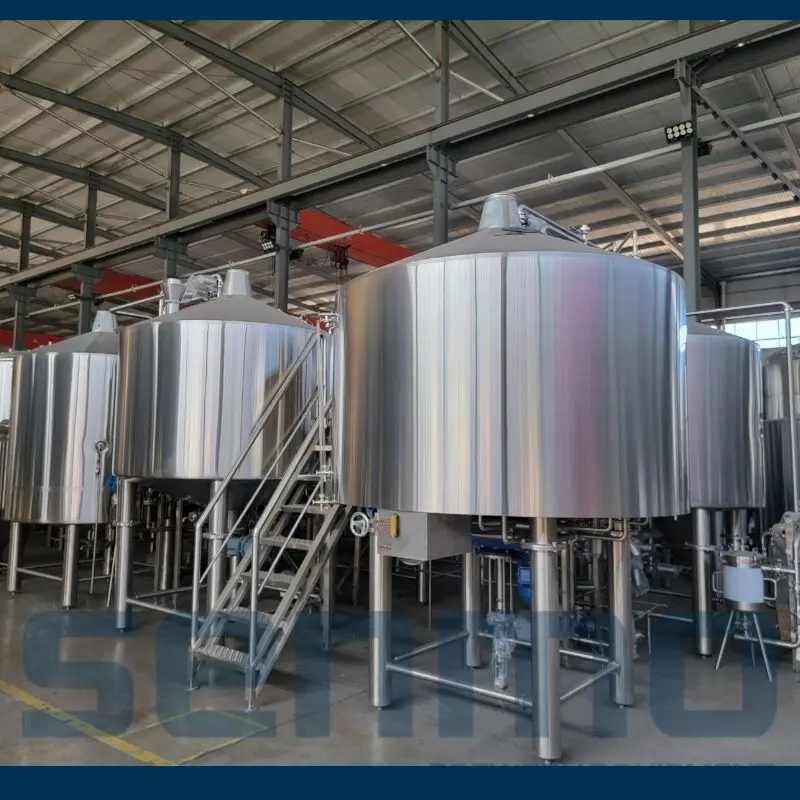
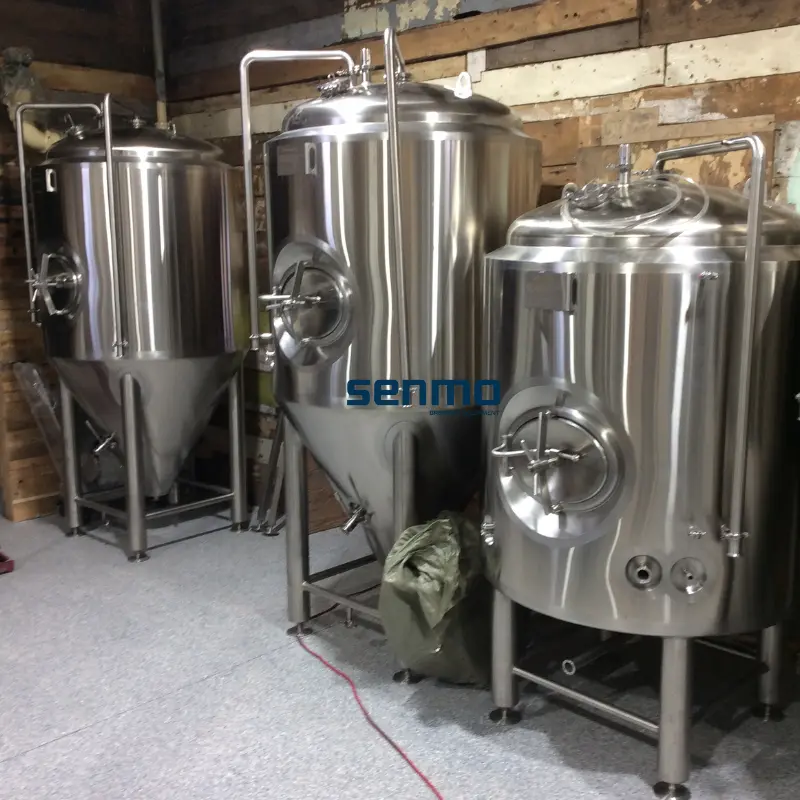
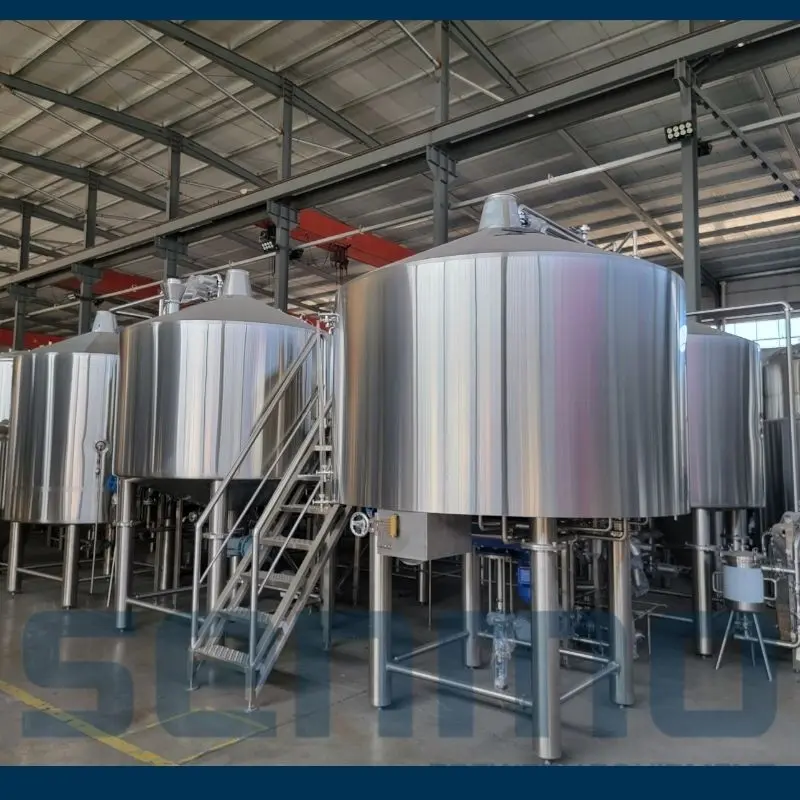
Complete brewhouse system for microbrewery, stainless‑steel brewing tanks in workshop
Is Starting a Microbrewery a Good Business?
A microbrewery can be a rewarding business, but producing good beer is only one part of the equation.
Before investing in equipment, ask yourself:
Who are my target customers?
What makes my beer different?
How many competing breweries operate in my market?
Will I sell mainly through a taproom or wholesale distribution?
What beer styles are in demand?
What price can customers realistically pay?
How much beer can my market absorb?
How much working capital will I need?
How long can the business operate before reaching stable sales?
A brewery business plan should connect these questions to measurable financial assumptions.
You should know your expected production volume, average selling price, cost of goods, fixed expenses, labor costs, and working-capital requirements before committing to a large equipment purchase.

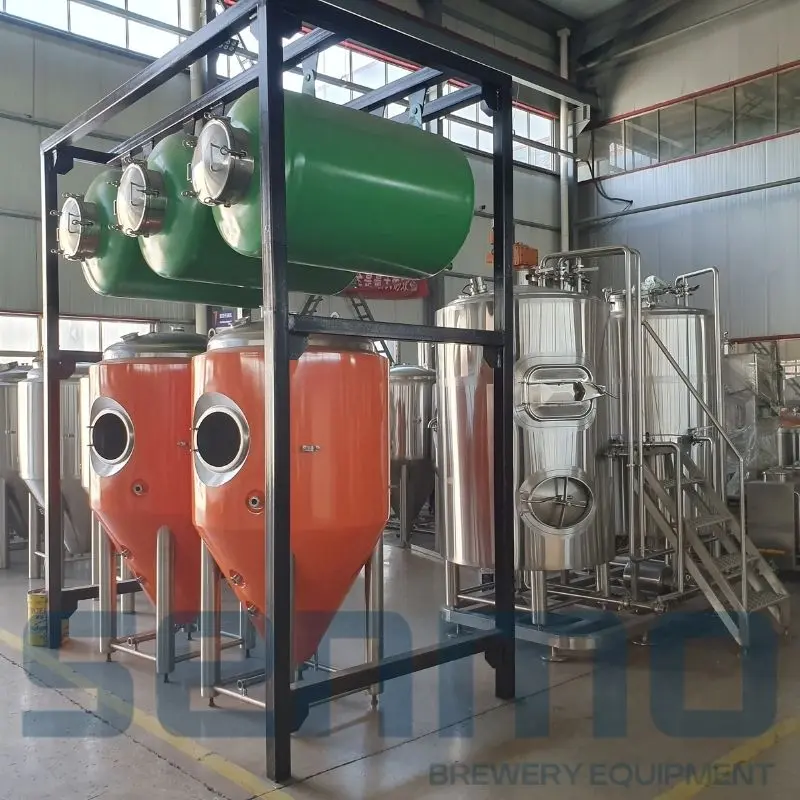
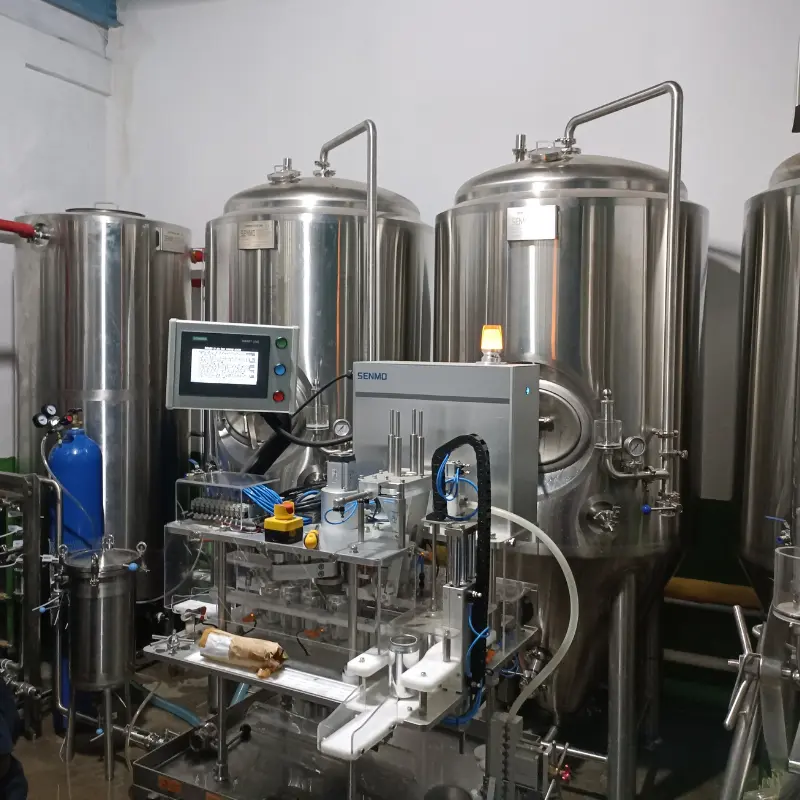
Combination unit of fermenters and overhead hop tanks for small‑scale brewery
How Much Does It Cost to Start a Microbrewery?
One of the most important questions for a new brewery owner is:
How much does it cost to start a microbrewery?
There is no universal startup cost.
The investment can vary significantly depending on:
Brewhouse size
Number and size of fermenters
Packaging method
Building condition
Location
Taproom size
Utility infrastructure
Automation level
New or used equipment
Installation requirements
Licensing
Working capital
A brewery project should therefore be budgeted as a complete system rather than as a single equipment purchase.
Major Microbrewery Startup Cost Categories
| Cost Category | Examples |
|---|---|
| Brewing equipment | Brewhouse, mash tun, kettle, whirlpool |
| Fermentation | Fermenters, brite tanks |
| Cooling | Glycol chiller, glycol tank, heat exchanger |
| Heating | Steam generator, boiler, electric or direct-fire system |
| Utilities | Electrical, water, drainage, ventilation |
| Facility | Lease, construction, flooring, plumbing |
| Packaging | Kegging, canning, or bottling equipment |
| Licensing | Federal, state, provincial, and local approvals |
| Ingredients | Malt, hops, yeast, cleaning chemicals |
| Storage | Cold room, dry storage, finished beer storage |
| Taproom | Bar, furniture, refrigeration, POS |
| Labor | Brewers, cellar staff, packaging staff, taproom staff |
| Marketing | Branding, website, launch campaigns |
| Working capital | Rent, payroll, utilities, ingredients, insurance |
The key lesson is simple:
The brewhouse is only one part of the total brewery investment.
A low equipment quotation does not necessarily mean a low-cost brewery project.
A building may require electrical upgrades, drainage, ventilation, plumbing, flooring, wastewater improvements, or structural work before brewery equipment can be installed.
Create a Microbrewery Business Plan
Before choosing a brewhouse, create a business plan.
Your plan should answer five fundamental questions.
What Will You Produce?
Define your initial beer portfolio.
You might start with:
IPA
Pale Ale
Lager
Pilsner
Stout
Porter
Wheat Beer
Seasonal beers
Limited releases
You do not necessarily need a large portfolio at launch.
A focused portfolio can make production planning, inventory management, branding, and quality control easier.
Who Will Buy Your Beer?
Define your target customers.
Possible customer groups include:
Local craft beer drinkers
Tourists
Restaurant customers
Bar customers
Retail customers
Supermarket shoppers
Taproom visitors
Specialty beer enthusiasts
Where Will You Sell It?
Possible sales channels include:
Taproom
Brewery shop
Restaurants
Bars
Beer distributors
Retail stores
Supermarkets
Kegs
Cans
Bottles
Events
The available sales channels will influence how much beer you need to produce and what packaging equipment you require.
How Much Beer Do You Need to Produce?
This question will determine your brewery capacity.
Do not start by asking:
“What size brewery should I buy?”
Start by asking:
“How much beer do I realistically expect to sell?”
How Will the Business Make Money?
Build a financial model that separates:
Direct-to-consumer revenue
Wholesale revenue
Packaging revenue
Food revenue, if applicable
Other revenue streams
The brewery should be designed around the sales plan—not the other way around.
Choose Your Brewery Business Model
There is no single best model for every microbrewery.
Taproom Brewery
A taproom brewery produces beer primarily for direct sale at the brewery.
Advantages:
Higher direct selling price
Direct relationship with customers
Strong brand-building opportunity
Less dependence on distributors
Challenges:
Requires customer traffic
Location is critical
Requires hospitality management
Taproom construction can add significant cost
A taproom model may work particularly well when the brewery is located in a high-traffic area with a strong local customer base.
Production Brewery
A production brewery focuses on selling beer outside the brewery.
Typical channels include:
Distributors
Restaurants
Bars
Retail stores
Supermarkets
This model can support larger production volumes but usually requires more investment in packaging, storage, logistics, and working capital.
Brewpub
A brewpub combines beer production with a restaurant or food-service operation.
This creates multiple revenue streams, but it also increases operational complexity.
A brewpub may require:
Commercial kitchen
Food-service permits
Restaurant staff
Kitchen ventilation
Food storage
Additional refrigeration
Dining space
Hotel or Restaurant Brewery
A small brewery integrated into a hotel or restaurant can be designed primarily around on-site beer consumption.
These projects often prioritize:
Compact equipment
Attractive equipment display
Small-batch brewing
Taproom or restaurant service
Flexible beer production
The best equipment configuration depends on how much beer the establishment expects to consume and sell.
Research Your Market
Before choosing a location, research the market.
Study:
Local population
Customer demographics
Tourism
Existing breweries
Competitor beer styles
Average beer prices
Restaurant density
Bar density
Retail opportunities
Distribution opportunities
Parking
Foot traffic
Commercial rent
Local alcohol regulations
Your goal is not simply to find a building where brewing is possible.
Your goal is to find a location where the business model can generate enough revenue to support the brewery.
For example, a low-rent industrial building may be excellent for a production brewery but poor for a taproom.
Conversely, a high-traffic retail location may be attractive for a taproom but too expensive for a brewery that depends mainly on wholesale distribution.
Choose the Right Brewery Location
The building is one of the most important parts of the brewery project.
Before signing a lease, evaluate the following.
Floor Area
You need space for:
Brewhouse
Fermentation tanks
Bright tanks
Malt storage
Finished beer storage
Packaging
Cold storage
CIP
Utilities
Maintenance
Staff areas
Taproom, if applicable
Do not calculate space based only on the brewhouse.
The cold side, packaging area, storage, and utility systems can occupy significant space.
Ceiling Height
Fermentation tanks are often tall.
Check:
Clear ceiling height
Door height
Tank delivery route
Crane or lifting requirements
Installation access
A building may appear large enough on a floor plan but still be unsuitable if tanks cannot be safely installed.
Floor Drainage
Breweries use substantial amounts of water during brewing and cleaning.
Proper drainage should be planned from the beginning.
Consider:
Floor drains
Drain locations
Floor slope
Wastewater routing
Cleaning water flow
Water Supply
Water is a major brewery input.
It is used for:
Brewing
Mashing
Sparging
Cleaning
CIP
Sanitation
Cooling
Staff facilities
Water quality can also affect beer flavor and brewing performance.
Depending on the local water source and beer styles, water treatment may be required.
Electrical Capacity
Check the building's electrical service before ordering equipment.
Consider the requirements of:
Pumps
Motors
Chillers
Controls
Compressors
Packaging machines
Lighting
HVAC
Electric heating, if used
A brewery equipment supplier should provide electrical load information so the project can be designed correctly.
Ventilation
Brewing produces heat, steam, and moisture.
Adequate ventilation is particularly important around the brewhouse.
The ventilation system should be designed together with the building and heating system rather than added as an afterthought.
Understand Brewery Licenses and Permits
Alcohol production is regulated in most countries.
Licensing requirements depend on the country, state, province, and municipality where your brewery operates.
For example, in the United States, a brewery producing beer for sale generally needs to qualify with the Alcohol and Tobacco Tax and Trade Bureau (TTB) by obtaining an approved Brewer's Notice before beginning operations.
Federal approval is only one part of the process.
Depending on the location, you may also need:
State or provincial alcohol licensing
Local business licensing
Zoning approval
Building permits
Fire approval
Health permits
Wastewater approval
Retail or taproom permissions
Food-service permits, if applicable
Insurance
Do not assume that a brewery license automatically gives you permission to operate a taproom, restaurant, or retail business.
The specific requirements should be confirmed with the relevant local authorities and qualified legal or licensing professionals.
Determine Your Brewery Production Capacity
This is one of the most important decisions in the entire project.
Do not choose a brewery size simply because another brewery uses the same equipment.
Your production capacity depends on:
Brewhouse batch size
Batches per day
Brewing days per week
Fermentation time
Number of fermenters
Fermenter size
Tank utilization
Packaging capacity
Seasonal demand
Maintenance downtime
Product mix
A simplified planning formula is:
Annual Brewing Volume = Brewhouse Batch Size × Batches per Week × Production Weeks per Year
For example:
1,000 L × 2 batches/day × 5 days/week × 48 weeks = 480,000 L/year
This is a theoretical hot-side brewing volume, not necessarily the amount of packaged beer you will sell.
You still need to account for:
Brewhouse losses
Trub losses
Fermentation losses
Transfer losses
Packaging losses
Downtime
Tank availability
Unsold inventory
Therefore, production capacity should always be treated as a system-level calculation.
Brewhouse Size Does Not Equal Brewery Capacity
This is a common mistake among first-time brewery owners.
A 1,000-liter brewhouse does not automatically mean the brewery can efficiently produce 1,000 liters whenever needed.
Consider two breweries.
Brewery A
1,000 L brewhouse
1 brew/day
4 fermenters
Brewery B
1,000 L brewhouse
2 brews/day
8 fermenters
Although the brewhouse size is identical, the potential production capacity and operating model can be very different.
This is why the brewhouse, fermentation system, cooling system, and packaging system should be planned together.
Choose the Right Brewhouse Size
The correct brewhouse depends on your expected production volume, business model, building, labor, and future growth.
200–300L Brewery
A 200–300L system may be suitable for:
Pilot brewing
Small brewpubs
Restaurants
Recipe development
Very small taprooms
It can be useful when the primary goal is small-batch production and flexibility.
500L Brewery
A 500L system can be appropriate for:
Small commercial breweries
Brewpubs
Restaurants
Hotel breweries
Local taprooms
It can provide more commercial production capacity while maintaining a relatively compact footprint.
1000L Brewery
A 1,000L system is a practical starting point for many commercial microbrewery projects.
It can be used for:
Taproom production
Keg distribution
Local retail sales
Canned beer
Restaurant supply
Growing craft beer brands
The final configuration should be determined by expected annual production rather than vessel volume alone.
2000L Brewery
A 2,000L system can support a growing brewery that requires higher production capacity.
It may be appropriate for:
Regional distribution
Larger taprooms
Multiple beer brands
More frequent brewing
Commercial packaged beer
At this scale, fermentation capacity and utility planning become increasingly important.
5000L and Larger Brewery Systems
Larger systems are generally appropriate when the brewery has a clearly defined demand and distribution strategy.
The larger the brewery becomes, the more important it is to optimize:
Brewing efficiency
Labor
Tank utilization
Utilities
Packaging
Warehouse operations
Production scheduling
Buying a larger brewhouse simply because the brewery may grow someday can tie up capital unnecessarily.

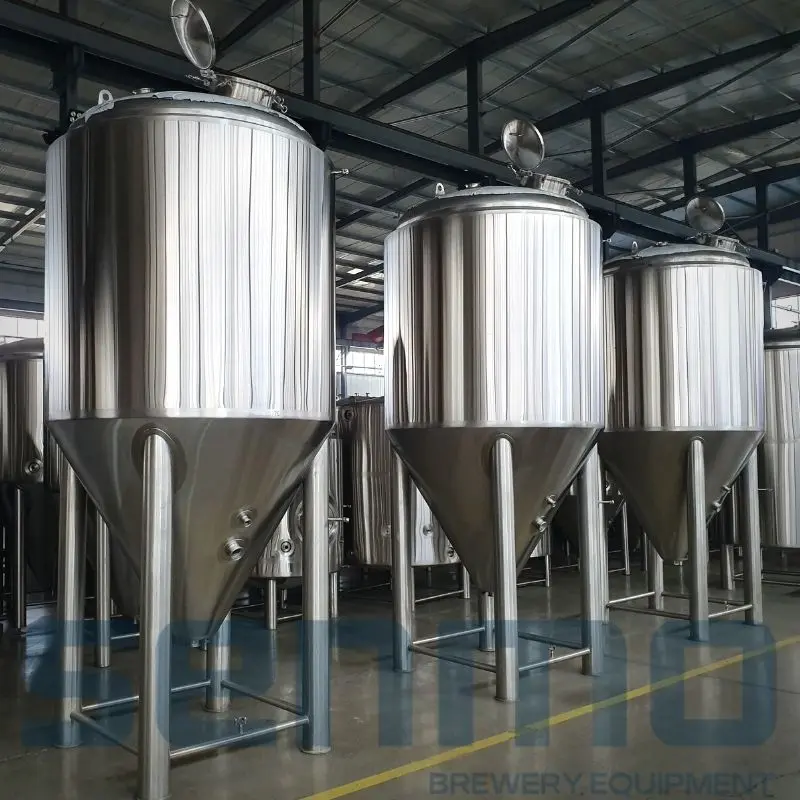
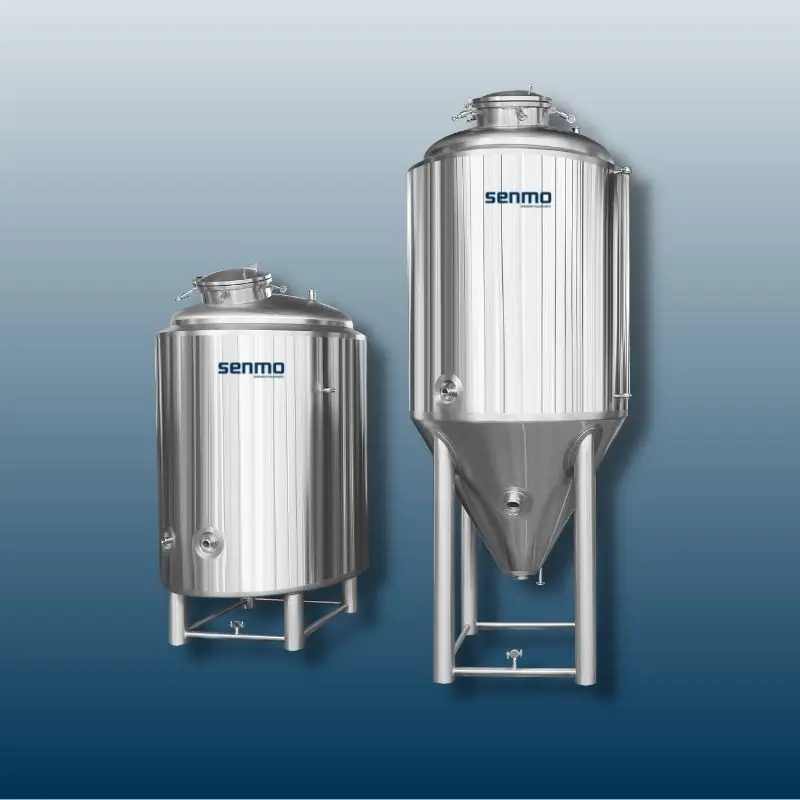
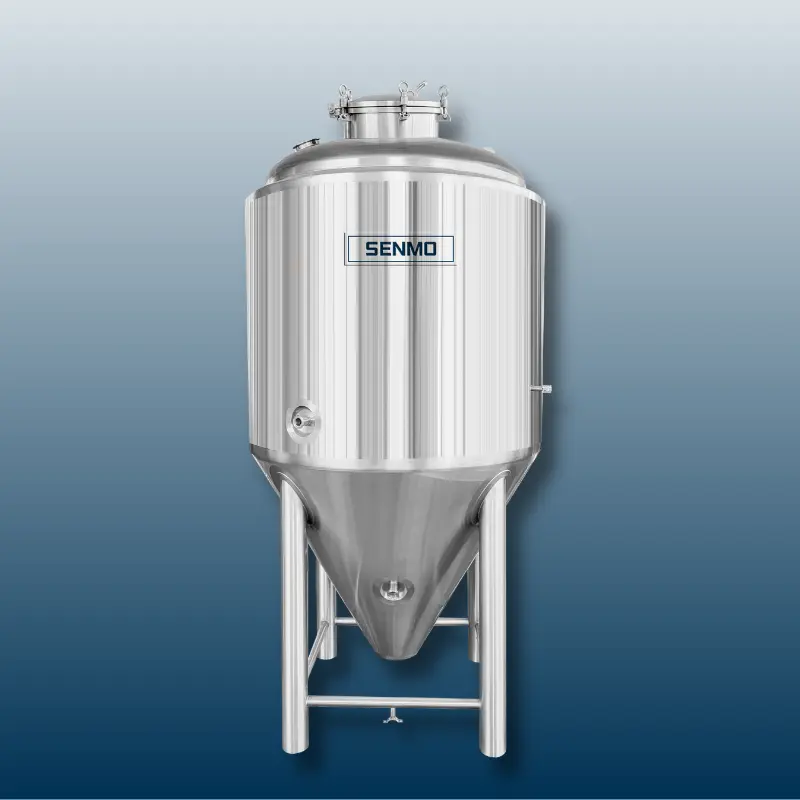
Stainless‑steel conical fermentation tanks for beer fermentation process
Design Your Brewery Layout
A good brewery layout should make material flow simple and safe.
A typical production flow is:
Malt Storage → Milling → Brewhouse → Fermentation → Conditioning → Packaging → Finished Beer Storage → Distribution
The layout should minimize unnecessary movement of:
Raw materials
Wort
Beer
Kegs
Cans
Staff
Cleaning equipment
Plan for Future Expansion
One of the best times to plan expansion is before the brewery is built.
If you expect to add fermenters later, consider:
Spare floor space
Utility capacity
Glycol capacity
Electrical capacity
Drainage
Pipe routing
Tank access
Adding future capacity during the original design can be much easier than rebuilding an operating brewery.
Choose the Right Microbrewery Equipment
A commercial microbrewery requires much more than a brewhouse.
The main equipment systems include:
Malt handling and milling
Brewhouse
Hot and cold liquor systems
Wort cooling
Fermentation
Beer conditioning
Cooling
CIP
Pumps and piping
Packaging
Control system
Utilities
Malt Mill
The malt mill crushes malt before mashing.
The objective is not simply to make the malt as fine as possible.
The crush must provide an appropriate balance between:
Extract efficiency
Lautering performance
Grain-bed permeability
Production consistency
For commercial brewing, mill selection should be matched to brewhouse capacity and production schedule.
Brewhouse
The brewhouse is the core of the hot-side brewing system.
Depending on the configuration, it may include:
Mash tun
Lauter tun
Brew kettle
Whirlpool
Pumps
Wort piping
Control system
Two-Vessel Brewhouse
A two-vessel system combines brewing functions into fewer vessels.
It can be attractive for:
Small breweries
Brewpubs
Limited floor space
Lower initial investment
Moderate production requirements
Three-Vessel Brewhouse
A three-vessel system separates more of the brewing operations.
It can provide:
Greater process flexibility
More scheduling options
Efficient production at higher utilization
Easier separation of mashing, lautering, and boiling functions
Four-Vessel or Larger Systems
Larger breweries may use additional vessels to increase throughput and process flexibility.
The correct configuration depends on the brewing schedule and desired production capacity.
Hot Liquor Tank
A Hot Liquor Tank, or HLT, stores heated brewing water.
It may provide water for:
Mashing
Sparging
Cleaning
Other process requirements
The HLT should be sized together with the brewhouse and brewing process.
Cold Water System
A cold-water system can be used in wort cooling and other brewing operations.
The exact configuration depends on:
Wort cooling method
Water temperature
Production volume
Glycol system
Local climate
Wort Heat Exchanger
After boiling and whirlpooling, wort must be cooled to an appropriate fermentation temperature.
A plate heat exchanger is commonly used.
The system should be sized based on:
Wort flow rate
Desired outlet temperature
Cooling-water temperature
Glycol capacity
Production schedule
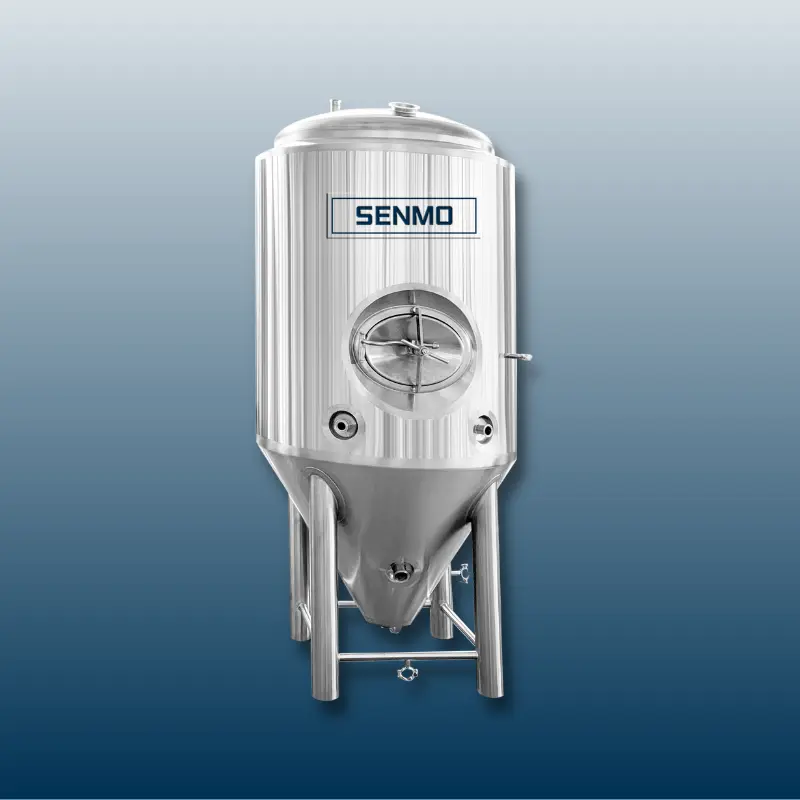
Fermentation Tanks
Fermentation tanks are where yeast converts fermentable sugars into beer.
Fermentation capacity can become the bottleneck in a growing brewery.
For example, increasing brewhouse capacity without increasing fermenter capacity may result in unused brewing capacity.
When selecting fermenters, consider:
Tank volume
Working volume
Fermentation temperature
Pressure rating
Cooling jacket configuration
Insulation
CIP requirements
Access
Future expansion
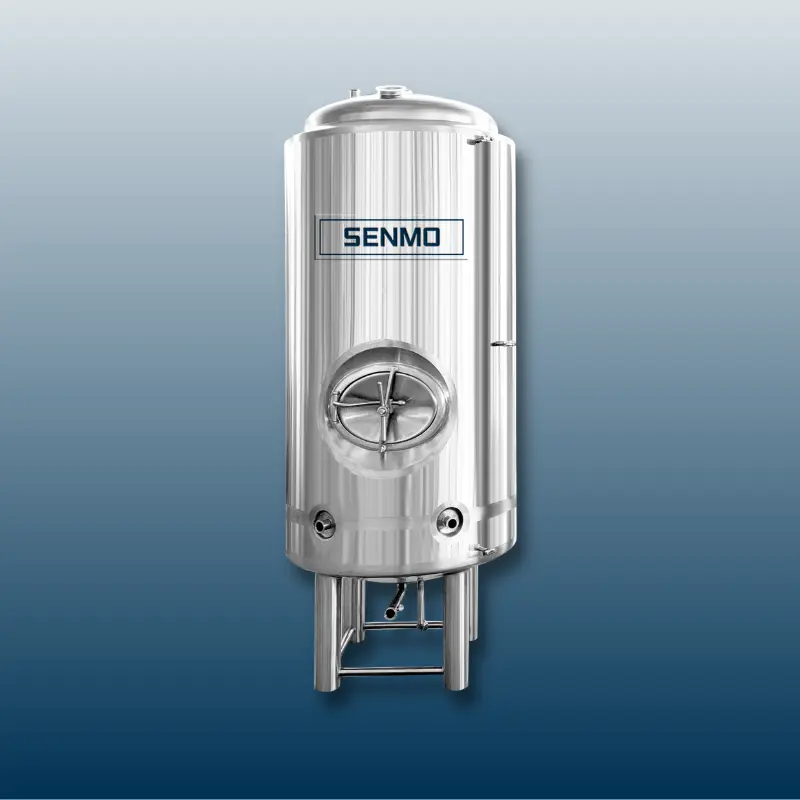
Bright Beer Tanks
Bright Beer Tanks, also called brite tanks, are commonly used for:
Beer conditioning
Clarification
Carbonation
Storage before packaging
Packaging preparation
They can provide greater flexibility when multiple beers need to be packaged or served on different schedules.
Glycol Cooling System
A glycol cooling system provides temperature-controlled coolant for fermentation and other cold-side applications.
The system normally includes:
Glycol chiller
Glycol tank
Pumps
Piping
Temperature controls
The cooling system should be sized based on the total heat load—not simply the volume of the largest fermenter.
Consider:
Number of fermenters
Tank size
Fermentation temperature
Ambient temperature
Wort cooling demand
Simultaneous cooling demand
Future tank expansion
CIP Cleaning System
CIP means Clean-In-Place.
A CIP system allows tanks and process equipment to be cleaned and sanitized without completely dismantling the equipment.
A typical CIP process may involve:
Pre-rinse
Caustic cleaning
Intermediate rinse
Acid cleaning when required
Final rinse
Sanitization
The exact cleaning program should be developed according to the brewery's equipment, water quality, chemicals, soil load, and sanitation procedures.
Pumps, Valves, Hoses, and Piping
These components are sometimes overlooked during equipment planning.
However, they are essential to the complete brewery system.
You should consider:
Wort pumps
CIP pumps
Transfer pumps
Sanitary valves
Piping
Flexible hoses
Manifolds
Sampling ports
Pressure gauges
Temperature sensors
The brewery should be designed as a complete process system rather than as a collection of independent tanks.
Keg Filling and Cleaning
Kegs are an important packaging option for:
Taprooms
Restaurants
Bars
Local distribution
A brewery may require:
Keg washer
Keg filler
CO₂ system
Keg storage
Cold storage
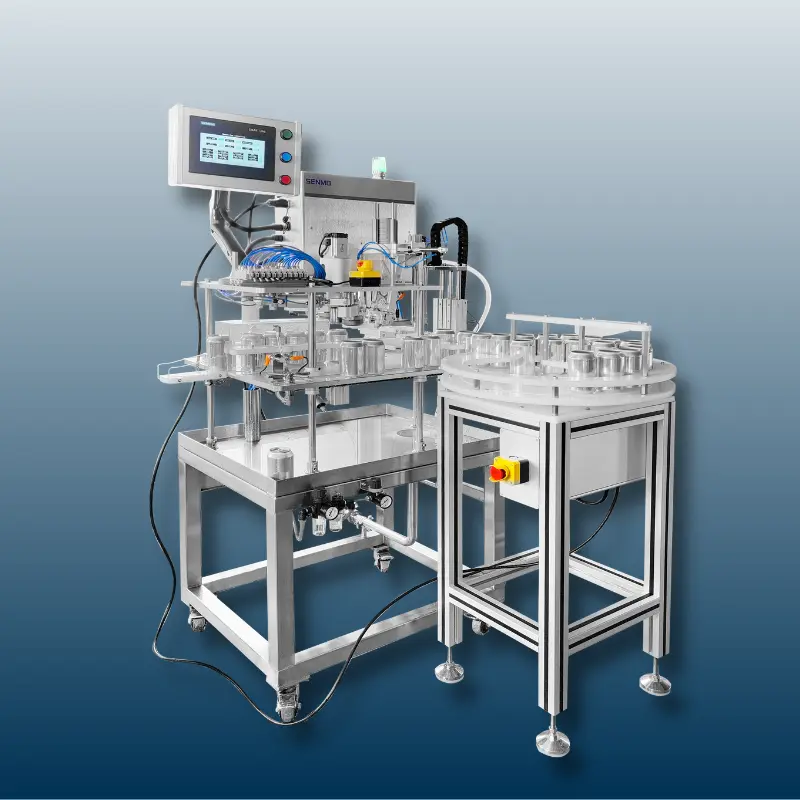
Canning or Bottling Equipment
If packaged beer is part of your business model, you may need:
Can filler
Can seamer
Bottle filler
Bottle capper
Labeling system
Date coder
Packaging tables
Conveyor system
Do not automatically buy the fastest packaging line available.
Packaging equipment should match your actual sales volume and expected growth.

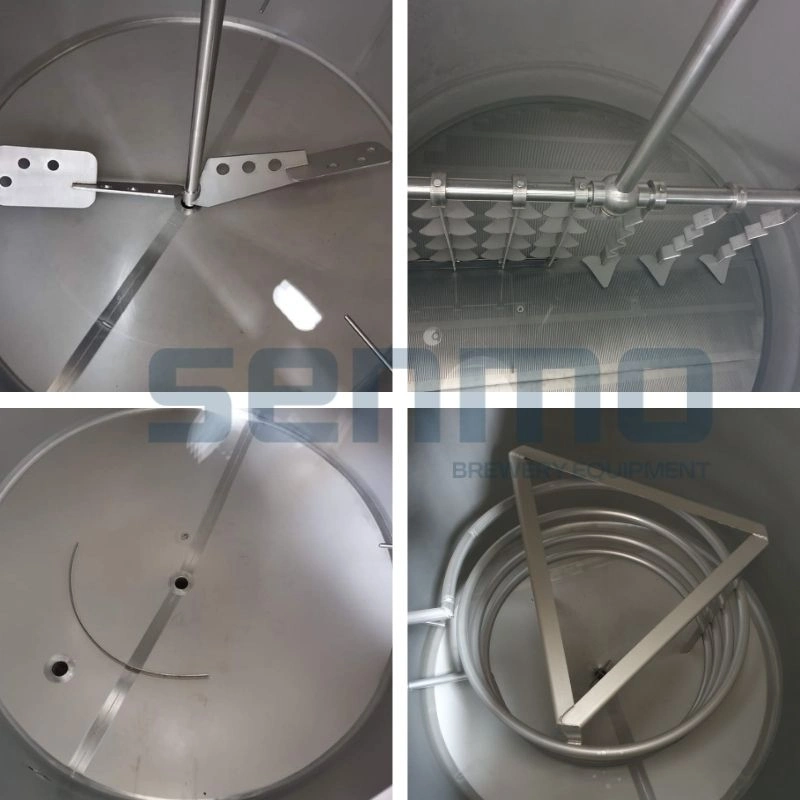
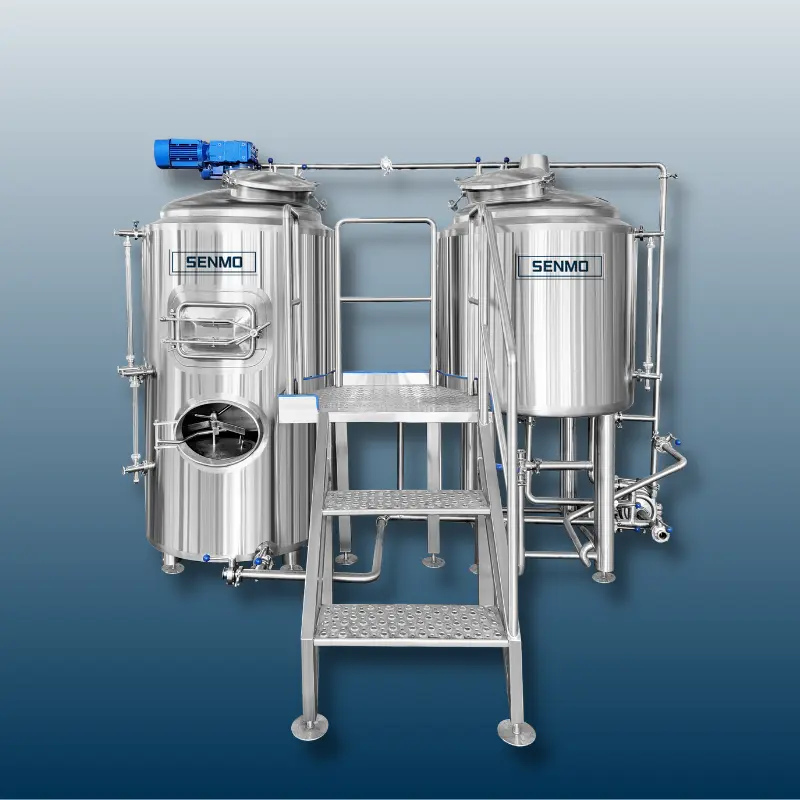
Internal components of brewhouse tanks: agitator, false bottom and heating coil
How Many Fermentation Tanks Do You Need?
There is no universal number.
The answer depends on:
Brewhouse size
Number of brews per week
Average fermentation time
Beer styles
Tank turnover
Packaging schedule
Seasonal demand
A simplified planning approach is:
Required Fermentation Capacity ≈ Weekly Production × Average Tank Residence Time
For example, if your brewery produces 5,000 liters per week and beer remains in fermentation and conditioning tanks for an average of two weeks, you need substantially more than one 5,000-liter tank to maintain a continuous production schedule.
The exact calculation should include tank working volume, cleaning time, transfers, and production scheduling.
How Does a Microbrewery Brewing System Work?
A typical brewing process follows this sequence:
Milling → Mashing → Lautering → Boiling → Whirlpool → Wort Cooling → Fermentation → Conditioning → Packaging
Mashing
Crushed malt is mixed with hot water.
During mashing, enzymes convert starches into fermentable and non-fermentable sugars.
Temperature control is important because mash temperature influences wort composition and the final beer profile.
Lautering
After mashing, liquid wort is separated from the spent grain.
The lauter system must provide efficient wort collection while maintaining an appropriate grain bed.
Boiling
The wort is boiled to:
Sterilize the wort
Concentrate the wort
Develop desired chemical reactions
Extract bitterness and aroma from hops
Whirlpool
After boiling, the wort can be transferred to a whirlpool vessel.
Whirlpooling helps separate trub and hop material from the wort before cooling.
Wort Cooling
The wort is cooled through a heat exchanger to the appropriate temperature for yeast pitching.
The cooled wort is then transferred to a fermentation tank.
Fermentation
Yeast converts fermentable sugars into:
Alcohol
Carbon dioxide
Flavor compounds
Fermentation temperature should be controlled according to the yeast strain and beer style.
Conditioning
The beer may then be:
Conditioned
Clarified
Carbonated
Matured
Transferred to a bright tank
Packaging
Finished beer can be packaged into:
Kegs
Cans
Bottles
The packaging method should be selected according to the brewery's sales strategy.
Brewery Utilities You Need to Plan
A brewery cannot operate efficiently without the right utility infrastructure.
Water
Water is required for both production and cleaning.
Plan for:
Brewing water
Cleaning water
CIP
Sanitation
Staff facilities
Wastewater
Water treatment may be required depending on the source.
Heating
Common brewing heat sources include:
Steam
Electric heating
Direct fire
The appropriate heating method depends on brewhouse size, energy costs, building infrastructure, regulations, and local conditions.
Electricity
Electrical planning should include:
Brewery controls
Pumps
Motors
Glycol chiller
Packaging
Lighting
HVAC
Compressors
Electric heating
Always confirm electrical requirements before equipment manufacturing is finalized.
Cooling
Cooling capacity should be calculated based on the complete cold-side load.
A growing brewery may require additional glycol capacity as fermenters are added.
Wastewater
Brewing generates wastewater from:
Brewing
Tank cleaning
CIP
Packaging
Floor cleaning
Wastewater requirements vary by location.
Confirm local discharge requirements before construction.
New vs. Used Brewery Equipment
Both new and used equipment can be appropriate depending on the project.
New Brewery Equipment
Advantages include:
Customized design
Modern controls
Manufacturer support
Warranty
Better integration
Easier future expansion planning
New equipment is often preferable for a first-time brewery project when reliability and system integration are high priorities.
Used Brewery Equipment
Used equipment can reduce initial capital requirements.
However, inspect:
Tank condition
Weld quality
Pressure rating
Pumps
Valves
Controls
Electrical components
Cooling system
Previous maintenance
Compatibility with local utilities
A lower purchase price does not always mean lower total project cost.
How Long Does It Take to Start a Microbrewery?
The timeline varies by:
Country
Project size
Building condition
Equipment configuration
Licensing requirements
Construction
Shipping
Installation
A typical project includes:
Business planning
Market research
Site selection
Financial planning
Licensing
Brewery design
Equipment selection
Equipment manufacturing
Building preparation
Equipment delivery
Installation
Commissioning
Staff training
Recipe development
Trial brewing
Quality control
Commercial launch
Do not plan the opening date based only on the equipment delivery date.
How to Make a Microbrewery Profitable
A brewery's profitability depends on both revenue and operating efficiency.
Important metrics include:
Revenue per liter or barrel
Ingredient costs
Packaging costs
Labor
Rent
Utilities
Distribution costs
Waste
Maintenance
Marketing
Financing costs
Taxes
You should also separate direct-to-consumer sales from wholesale sales.
One keg sold through a distributor and one pint sold directly in a taproom may represent very different revenue and margin structures.
Manage Capacity Carefully
More production does not automatically mean more profit.
If a brewery produces more beer than it can sell, additional production can increase:
Inventory
Storage requirements
Packaging costs
Working capital
Waste
The objective should be:
Produce the right amount of beer at the right cost for the market you can actually serve.
Common Mistakes When Starting a Microbrewery
Buying Equipment Before Creating a Business Plan
Equipment should follow the production and sales plan.
Choosing a Brewhouse Based Only on Price
Consider:
Capacity
Energy efficiency
Labor
Automation
Maintenance
Expansion
Installation
After-sales support
Underestimating Fermentation Capacity
A large brewhouse with too few fermenters creates a cold-side bottleneck.
Underestimating Building Costs
Identify plumbing, drainage, electrical, ventilation, flooring, structural, and wastewater requirements before signing the final equipment contract.
Ignoring Packaging
If you plan to sell cans or bottles, include packaging requirements in the original project plan.
Buying Too Much Equipment
Unused equipment ties up capital.
Not Planning for Expansion
Leave appropriate space and utility capacity for additional tanks if growth is part of the business plan.
Underestimating Working Capital
Equipment may be purchased before revenue begins.
You still need money for:
Payroll
Rent
Utilities
Ingredients
Packaging
Insurance
Marketing
Maintenance
Microbrewery Startup Checklist
Business Planning
Business plan
Target market
Beer portfolio
Sales channels
Pricing strategy
Financial model
Funding plan
Working capital
Location
Appropriate zoning
Lease or property
Adequate floor area
Ceiling height
Water supply
Electrical capacity
Drainage
Ventilation
Wastewater plan
Expansion space
Licensing
Federal requirements
State/provincial requirements
Local business license
Alcohol manufacturing approval
Taproom approval
Building permits
Fire approval
Health permits where applicable
Brewery Equipment
Malt mill
Brewhouse
Hot Liquor Tank
Cold water system
Wort heat exchanger
Fermentation tanks
Bright Beer Tanks
Glycol cooling system
CIP system
Pumps
Sanitary valves
Hoses and piping
Keg equipment
Canning or bottling equipment
Control system
Operations
Brewing recipes
Brewing SOPs
CIP procedures
Quality-control procedures
Inventory system
Maintenance procedures
Staff training
Packaging procedures
Sales plan
How Senmo Can Help You Start a Microbrewery
Choosing a brewery equipment manufacturer is an important part of a new brewery project.
The right supplier should do more than manufacture individual stainless-steel tanks.
A complete brewery project may require:
Brewery process design
Equipment selection
Capacity planning
Brewery layout
Equipment manufacturing
Utility planning
Installation
Commissioning
Technical training
After-sales support
This is where a turnkey brewery equipment supplier can provide value.
Turnkey Brewery Solutions
Shandong Senmo Machinery Company provides turnkey brewery solutions for applications including:
Microbreweries
Brewpubs
Hotel restaurants
Restaurant breweries
Commercial craft breweries
Its project services can integrate:
R&D → Experiment → Process Design → Equipment Manufacturing → Installation → Technical Process Training
This approach allows brewery owners to work with one equipment partner across multiple stages of the project.
Brewery Equipment for Different Production Scales
A brewery should be designed around the customer's actual production requirements.
Senmo develops brewery equipment for both small and larger brewery projects, with configurations that can be customized according to:
Brewhouse capacity
Fermentation capacity
Beer styles
Production schedule
Available floor space
Heating method
Cooling requirements
Packaging requirements
Automation level
Future expansion
Depending on the project, brewery systems can be configured around different production scales, from compact small-batch systems to larger commercial brewing installations.
The important point is not simply choosing a larger tank.
It is designing the brewhouse, fermentation, cooling, CIP, utilities, and packaging systems as one production system.
Custom Brewery Equipment
Every brewery has different requirements.
Senmo can customize equipment according to project conditions.
Materials
Common material options include:
SUS304 stainless steel
SUS316 stainless steel
Copper exterior shells for selected equipment
Control Systems
Equipment can be configured with:
Manual control
Semi-automatic control
Automatic control
Voltage
Electrical configurations can be customized according to the destination market and project requirements.
This is particularly important for international brewery projects because electrical standards and available power vary between countries.
Brewery Manufacturing and Quality Considerations
Brewery equipment is a long-term investment.
When comparing suppliers, consider more than the equipment quotation.
Ask about:
Material specifications
Tank construction
Welding quality
Pressure ratings
Insulation
Cooling jackets
Valves
Pumps
Control systems
Electrical components
Factory inspection
Testing
Installation
Warranty
Spare parts
After-sales support
Senmo operates a production workshop of more than 2,000 square meters, with more than 80 production employees and a sales and after-sales service team of more than 20 people.
The company has nine years of R&D and manufacturing experience in brewery equipment and has developed five major product series with more than 50 equipment varieties, covering brewing equipment, fermentation systems, filling machines, dispensers, and display freezers.
Overseas Installation and Technical Training
International brewery projects often require more than equipment delivery.
Installation, commissioning, and operator training can influence the success of the brewery after the equipment arrives.
Senmo provides overseas engineer installation services and technical process training for international brewery projects.
This can support:
Equipment installation
Pipeline connections
System commissioning
Operating procedures
Brewing process training
Equipment maintenance
Warranty and International Support
Senmo provides a five-year warranty for its brewery equipment and supports international projects with after-sales service.
The company reports that its equipment has been exported to more than 20 countries and regions across Europe, America, Australia, and Asia.
For an international brewery project, discuss warranty coverage, spare parts, installation responsibilities, technical support, and response procedures with the equipment supplier before signing the final contract.
What Should You Ask a Brewery Equipment Manufacturer?
Before purchasing brewery equipment, ask the supplier to provide clear answers to the following questions.
Production
What brewhouse size do you recommend?
How many brews per day can the system support?
What is the expected annual production capacity?
How many fermenters should I purchase?
Engineering
What are the electrical requirements?
What heating method do you recommend?
What cooling capacity is required?
What water supply is required?
What drainage is required?
What floor area is needed?
Equipment
What materials are used?
What is the tank working volume?
What is the pressure rating?
What controls are included?
What pumps and valves are included?
Installation
Is installation included?
Can an engineer travel to the brewery?
Is commissioning included?
Is operator training available?
Commercial
What is the manufacturing lead time?
What does the quotation include?
Is shipping included?
Are spare parts included?
What is the warranty?
What after-sales support is available?
A detailed quotation should clearly distinguish equipment, accessories, freight, installation, commissioning, and optional items.
How to Choose the Right Brewery Equipment Supplier
Price is important, but it should not be the only factor.
Engineering Capability
Can the supplier design a complete brewery system rather than simply sell individual tanks?
Manufacturing Capability
Does the supplier have an actual production facility and an experienced manufacturing team?
Customization
Can the equipment be adapted to your building, utilities, voltage, process, and capacity?
Installation
Can the supplier provide on-site installation and commissioning?
Technical Support
Will the supplier help train your brewery team?
Warranty
Is warranty coverage clearly defined?
International Experience
Does the supplier have experience with international brewery projects?
Project Integration
Can the supplier coordinate brewhouse, fermentation, cooling, CIP, and packaging systems?
A brewery is a process system.
The best equipment supplier is therefore not necessarily the one with the cheapest individual tank.
It is the supplier that can help you build a system that works together.
Frequently Asked Questions About Starting a Microbrewery
How much does it cost to start a microbrewery?
There is no universal startup cost. The total depends on brewery size, location, building work, equipment, utilities, packaging, licensing, staffing, and working capital.
The most reliable approach is to create a project-specific budget rather than relying on a single industry average.
What equipment do I need to start a microbrewery?
A commercial microbrewery typically needs a brewhouse, malt handling system, fermentation tanks, cooling system, wort heat exchanger, pumps and piping, CIP equipment, and packaging or kegging equipment.
Additional equipment depends on the business model and production requirements.
What size brewhouse should I buy?
Choose the brewhouse according to expected production volume, brewing frequency, fermentation capacity, available space, labor, sales channels, and future expansion.
Do not choose a brewhouse based only on the initial purchase price.
Is a 500L brewery suitable for a commercial business?
A 500L system can be suitable for small commercial breweries, brewpubs, restaurants, hotels, and taproom-focused businesses.
Whether it is sufficient depends on the number of batches you plan to brew and the size of your fermentation system.
Is a 1000L brewery suitable for a microbrewery?
A 1000L system can be a practical commercial scale for many microbrewery projects, particularly when combined with appropriate fermentation, cooling, and packaging capacity.
The correct configuration depends on the target annual production.
How many fermenters do I need?
The number depends on batch size, fermentation time, tank turnover, beer styles, and brewing frequency.
Fermentation capacity should be calculated at the same time as brewhouse capacity.
Do I need a glycol chiller?
Most commercial breweries using temperature-controlled fermentation require an appropriate cooling system.
The size of the glycol system depends on the number and size of tanks, fermentation temperatures, ambient conditions, and cooling demand.
What is a CIP system?
CIP means Clean-In-Place.
It allows brewing tanks and process equipment to be cleaned and sanitized without complete disassembly.
Do I need a canning machine?
Only if packaged cans are part of your sales strategy.
If your brewery primarily sells beer through a taproom or kegs, a canning line may not be necessary at the beginning.
Do I need a brewery license?
Commercial beer production is regulated in most jurisdictions.
The exact requirements depend on your country and local government.
For example, U.S. breweries generally need an approved TTB Brewer's Notice before beginning commercial brewing operations, in addition to applicable state and local requirements.
How much space does a microbrewery need?
There is no universal minimum.
Required space depends on:
Brewhouse size
Fermenter count
Packaging
Storage
Utilities
Workflow
Taproom size
Future expansion
Can I start a brewery with used equipment?
Yes, used equipment can reduce initial capital requirements.
However, inspect the equipment carefully and consider refurbishment, installation, compatibility, warranty, and spare parts before purchasing.
How long does it take to start a microbrewery?
The timeline varies according to licensing, construction, equipment manufacturing, shipping, installation, commissioning, and staff training.
Plan the entire project rather than using equipment delivery as the only milestone.
Final Microbrewery Startup Roadmap
If you are starting a microbrewery for the first time, follow this sequence:
1. Define the business model
Decide whether you are building a taproom, production brewery, brewpub, restaurant brewery, or another model.
2. Research the market
Understand customers, competitors, prices, distribution, and local demand.
3. Build the financial model
Calculate startup investment, operating costs, revenue, break-even point, and working capital.
4. Select the location
Confirm zoning, utilities, drainage, ceiling height, floor area, and expansion potential.
5. Understand licensing
Confirm federal, state, provincial, and local requirements before construction and production.
6. Calculate production capacity
Determine how much beer you actually need to produce.
7. Select the brewhouse
Choose the appropriate batch size and vessel configuration.
8. Calculate fermentation capacity
Make sure the cold side can support the planned brewing schedule.
9. Design the brewery layout
Plan material flow, utilities, cleaning, storage, packaging, and future expansion.
10. Select complete brewery equipment
Coordinate brewhouse, fermenters, brite tanks, cooling, CIP, packaging, controls, and utilities.
11. Install and commission the brewery
Complete installation, testing, commissioning, and operator training.
12. Brew and validate
Start with trial production, quality control, recipe validation, and process optimization.
13. Launch and sell
Build your taproom, distribution, retail, restaurant, bar, or direct-sales channels.
14. Expand based on demand
Add fermentation tanks, packaging capacity, or brewing capacity when the market justifies the investment.
Conclusion: Start With the Business, Then Build the Brewery
Starting a microbrewery is a major investment, but the process becomes much easier when each decision is connected to the next.
The most important principle is:
Do not choose the brewery equipment first. Choose the business model and production requirements first.
Then determine:
Market → Sales → Production Volume → Brewhouse → Fermentation Capacity → Cooling → Packaging → Utilities → Layout → Installation
A well-designed brewery is not simply a collection of stainless-steel tanks.
It is an integrated production system in which the brewhouse, fermentation tanks, cooling system, CIP, utilities, packaging, and workflow all work together.
For new brewery owners, working with an experienced brewery equipment manufacturer can simplify this process by bringing equipment engineering, customization, manufacturing, installation, and technical support together.
If you are planning a new microbrewery and already know your target production volume, beer styles, available space, and preferred sales channels, the next step is to develop a project-specific brewery equipment configuration and layout.
The right brewery starts with the right plan. If you need a solution, please feel free to contact us.